With Agents, What Else Does an Owner Need?
Faster execution, new demands on judgment and collaboration.
A small product change can spend more time waiting between people than moving forward.
Before anyone can assess a proposal, someone has to establish what users need, what the product currently does, and what the change would look like. Each question can become another request, another queue, another conversation to restart.
While owning a recent product change, I worked through more of those questions directly with an agent. That expanded how far I could carry the work myself. It also made the limits of that reach easier to see.
The usual path would have started with a requirements document. Then a wait for design, an engineering assessment, and several rounds of discussion about copy and edge cases. Before making a useful proposal, I also needed to check whether our assumptions still matched the current implementation.
This time, I could investigate those questions directly with the agent.
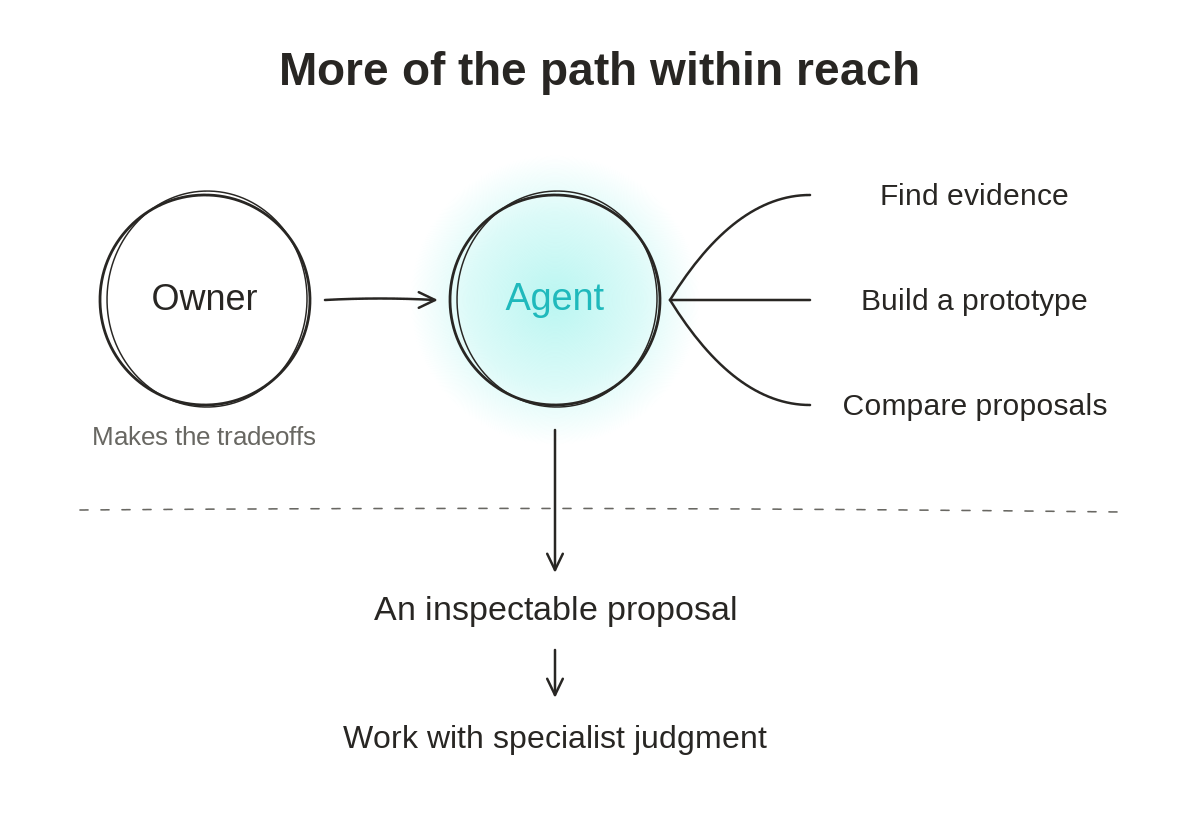
We examined usage patterns to understand who the change would affect and which constraints mattered. That gave me evidence for choosing between options.
We checked the implementation rather than relying on everyone’s memory of earlier decisions. That gave the discussion a common starting point.
Then the agent helped turn the proposal into a clickable prototype, with the main states and their accompanying copy. Once engineering proposed a technical approach, it compared that approach with the requirements and helped me prepare a response.
By the time I asked other people to assess the change, they had something they could inspect. Some investigation and preparation had moved out of their queues. Implementation and release were still ahead, so this was a change in how the proposal reached review, rather than evidence of a faster release cycle.
There was still substantial work for other people: choosing the technical approach, refining the interaction and visual design, and reviewing changes that affected shared systems.
I reached those conversations with something concrete for people to inspect.
DRI gives this responsibility a name. The term stands for Directly Responsible Individual: a named person who keeps a piece of work moving, makes or obtains the necessary decisions, and follows through on the result.
That responsibility extends across the gaps between tasks. Sending the requirements does not settle whether the problem will be solved. An owner stays with the problem through those transitions.
Gregor Ojstersek’s account of the Codex team describes a similar span of responsibility. Engineers can initiate projects, carry them through delivery, and continue improving them. The person making the early tradeoffs needs to stay close to the results over time to learn whether those choices worked.
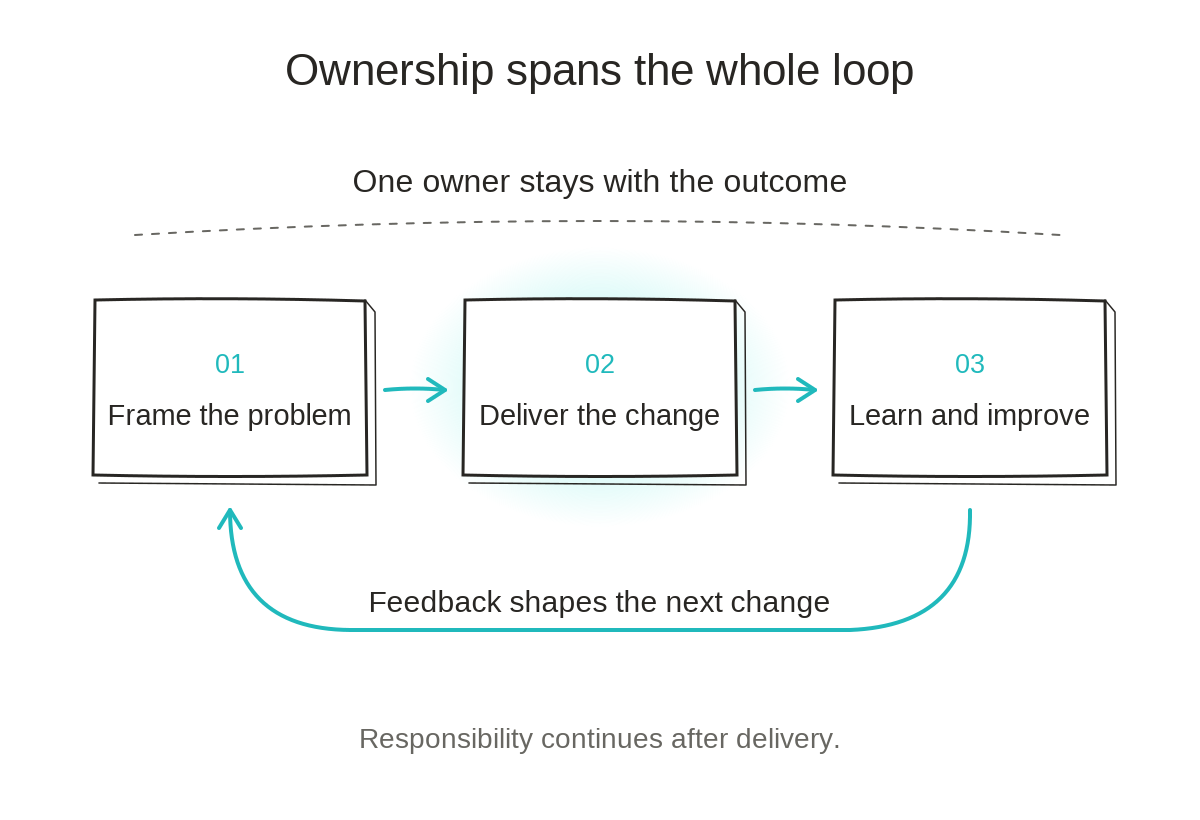
Redrawn and adapted from the ownership illustration in How OpenAI Builds AI-Native Engineering Teams, by Gregor Ojstersek.
The principle predates agents. What agents change is the practical scope of the role.
For a product owner, examining data, investigating code, and building a realistic prototype used to require several requests to other people. An agent with the appropriate access can bring some of that work within direct reach. The owner can learn more before asking for a decision, and make a proposal easier to evaluate.
Some handoffs exist because information or execution capability is hard to reach. Others bring expertise, an independent challenge, or responsibility for a system that someone will have to maintain. In this case, I could reduce the first kind and arrive better prepared for the second.
For this work, distinguishing between those handoffs mattered more than counting how many roles one person could cover.
We have also been building a shared agent work environment. If everyone first has to configure tools, connect information sources, and reconstruct the same business context, each person pays an entry cost before they can work on a problem. Maintaining those capabilities together lets more people start closer to the work itself.
The useful things accumulate there: knowledge of the business, established ways of doing recurring tasks, and checks learned from previous mistakes. A shared environment can make those available again without asking each person to rebuild them. Access still needs to match each person’s responsibilities.
In that product change, the environment helped me get from a user problem to an inspectable proposal. It did not supply the product judgment.
I still decided the scope of the change, the rules users would encounter, and which compatibility costs we would accept. The agent offered options and explained the tradeoffs. I chose which consequences we would accept.
Soon I was reviewing changes throughout the day.
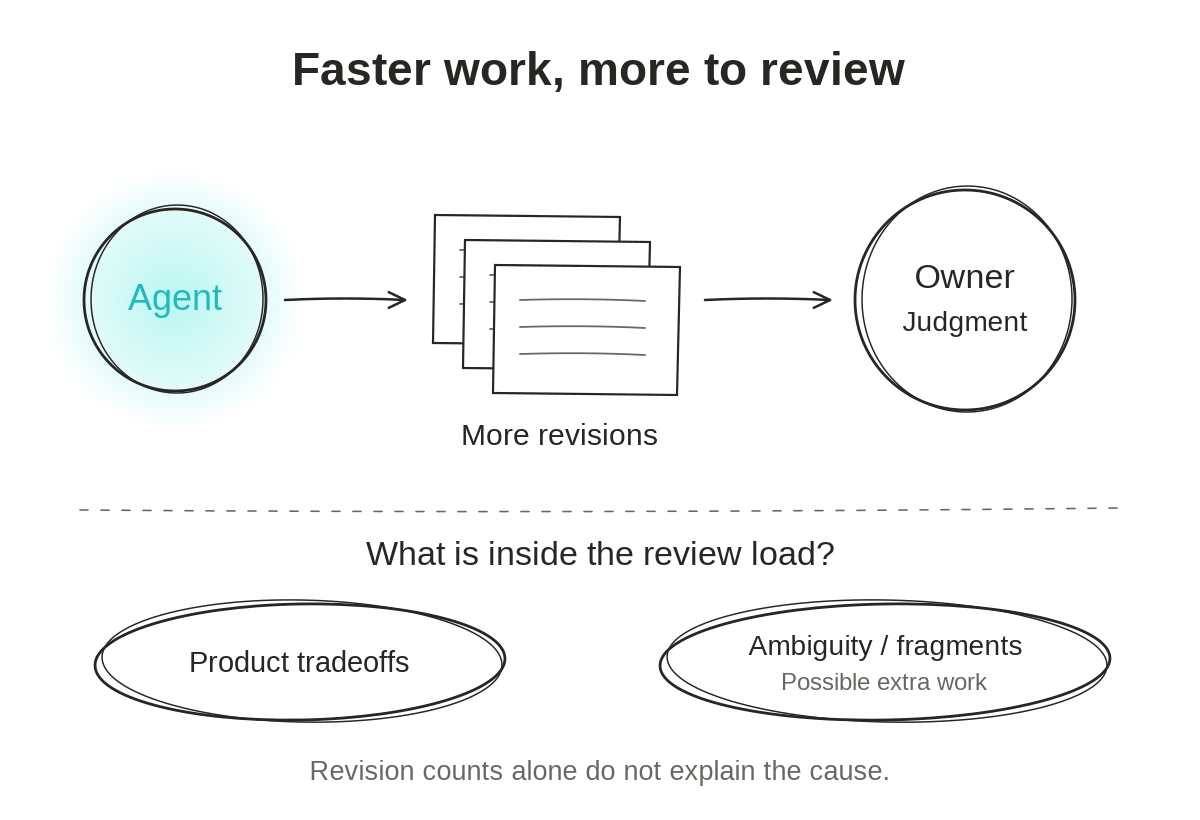
Copy, explanations of rules, and implementation details still needed correction during review. The agent could catch some mistakes through its own checks. Others depended on my attention. Producing something quickly did not establish that it was ready.
More execution capacity had created more work for my attention.
I cannot yet say how much of that review load was unavoidable. Some decisions were genuine product exploration. Some may have come from requirements I had not made clear enough, or changes arriving in pieces that were too small. Calling all of it a review bottleneck would let me avoid examining how I was directing the work.
Which judgments really require me, and which could become clear enough for someone else to make?
If everything returns to me for approval, the workflow still depends on my availability. It just reaches that limit sooner.
A separate user issue required another specialist’s judgment and authority.
The agent quickly narrowed down the cause and made the next question clear. Acting on the finding required a decision held by another specialist, because the change could affect people beyond the original complaint.
The investigation had moved quickly. At that point, the issue remained unresolved.
My first reaction was that decision rights had failed to keep up with execution. On reflection, that diagnosis was premature.
Two situations can look identical from the outside. One is a decision waiting for someone to make it. The other is a decision that cannot responsibly be made yet because compatibility tests, rollout conditions, or a rollback plan are missing. The first needs a timely response. The second needs more work.
At that point, I had not established which situation we were in. The case showed a boundary in what I could directly advance. It did not establish that the specialist’s approval was an unnecessary obstacle.
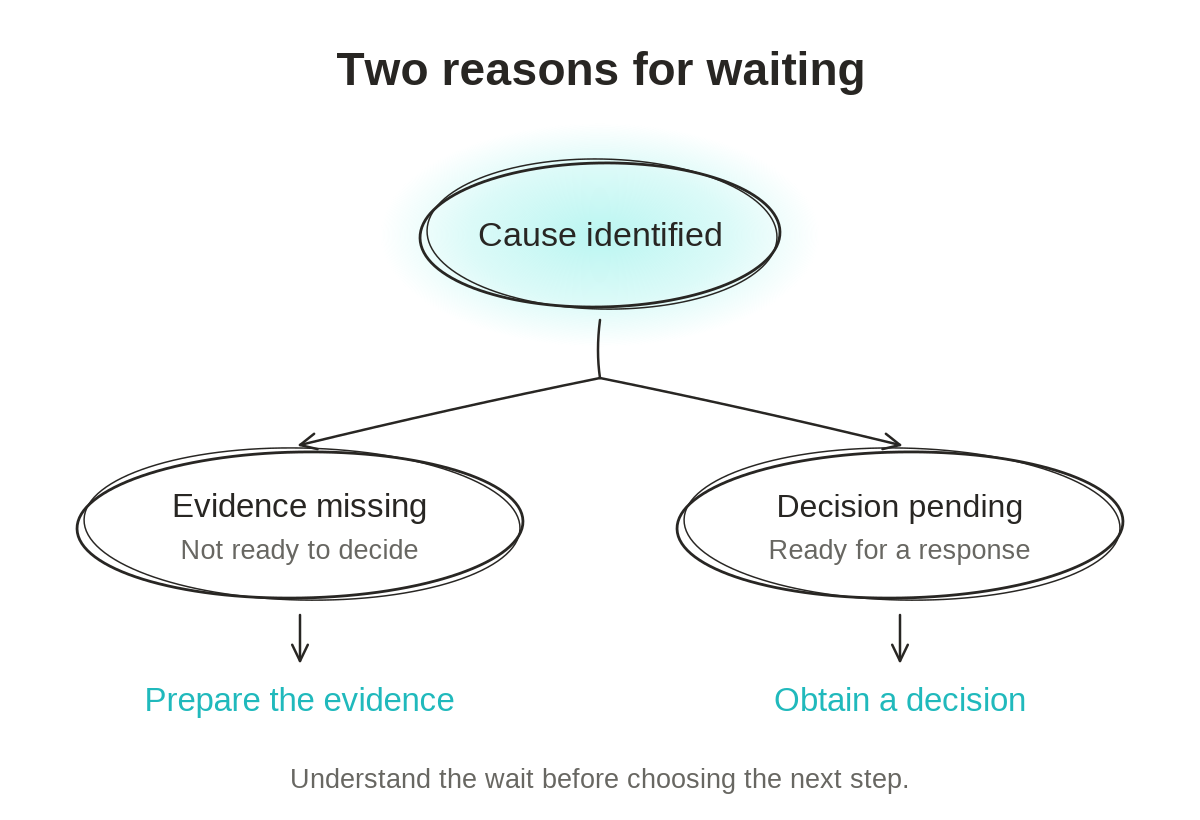
How does the work keep moving when it reaches someone else’s judgment or authority?
The owner of a user problem may need a specialist’s decision. That specialist may also carry responsibility for the reliability of a wider system. Both responsibilities are real. A faster investigation does not resolve the tension between them.
The person driving the issue needs to make the decision easier to reach. The person holding the decision needs a way to respond, identify missing evidence, or explain the conditions under which the work can proceed. Naming a DRI helps establish who will follow through. The relationship between those responsibilities still needs to work.
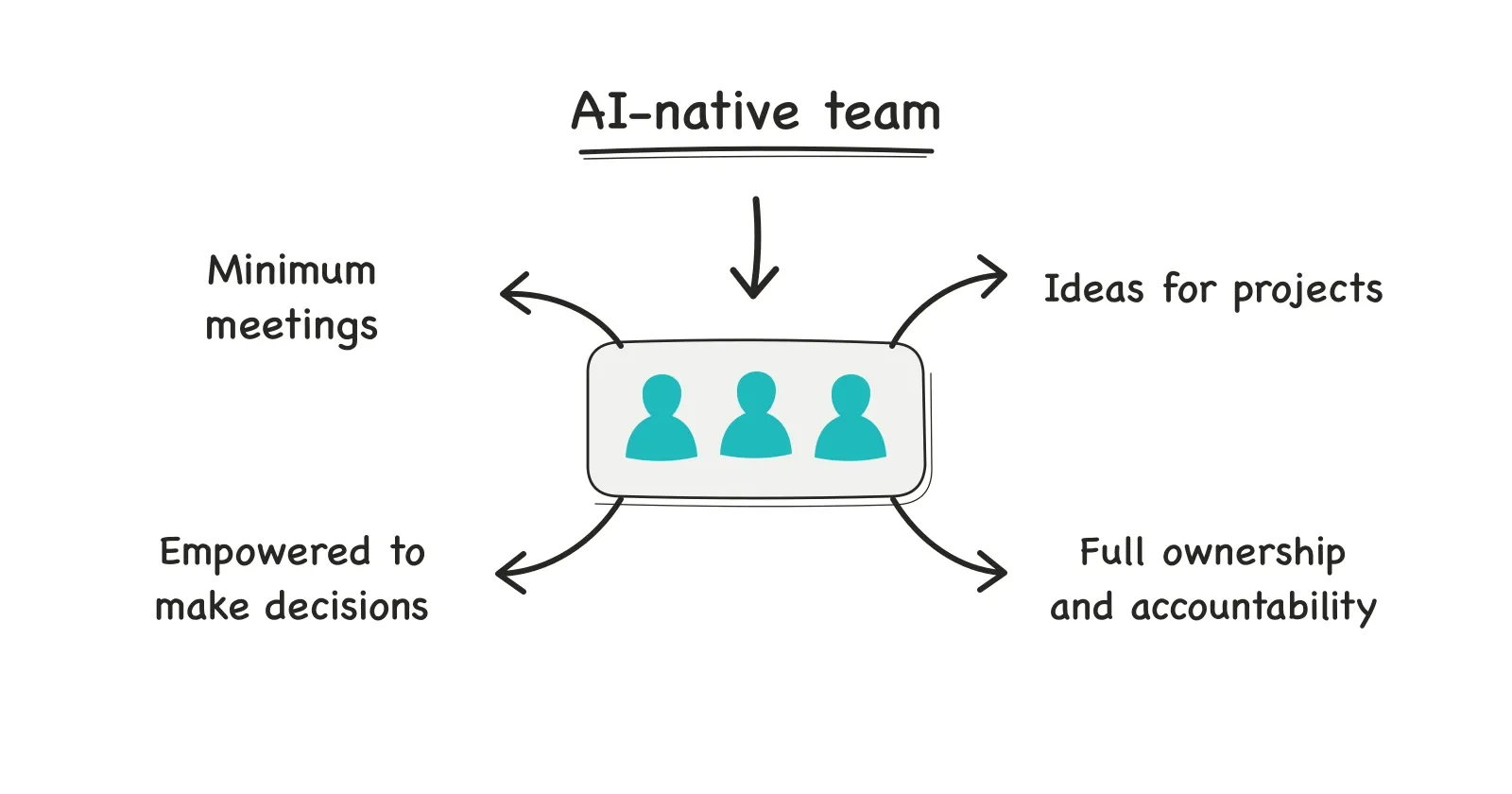
The same Codex account connects ownership with room to act. People can propose projects and make local decisions, while meetings mainly support alignment. It also describes people working together on projects. Broad ownership can coexist with close collaboration.
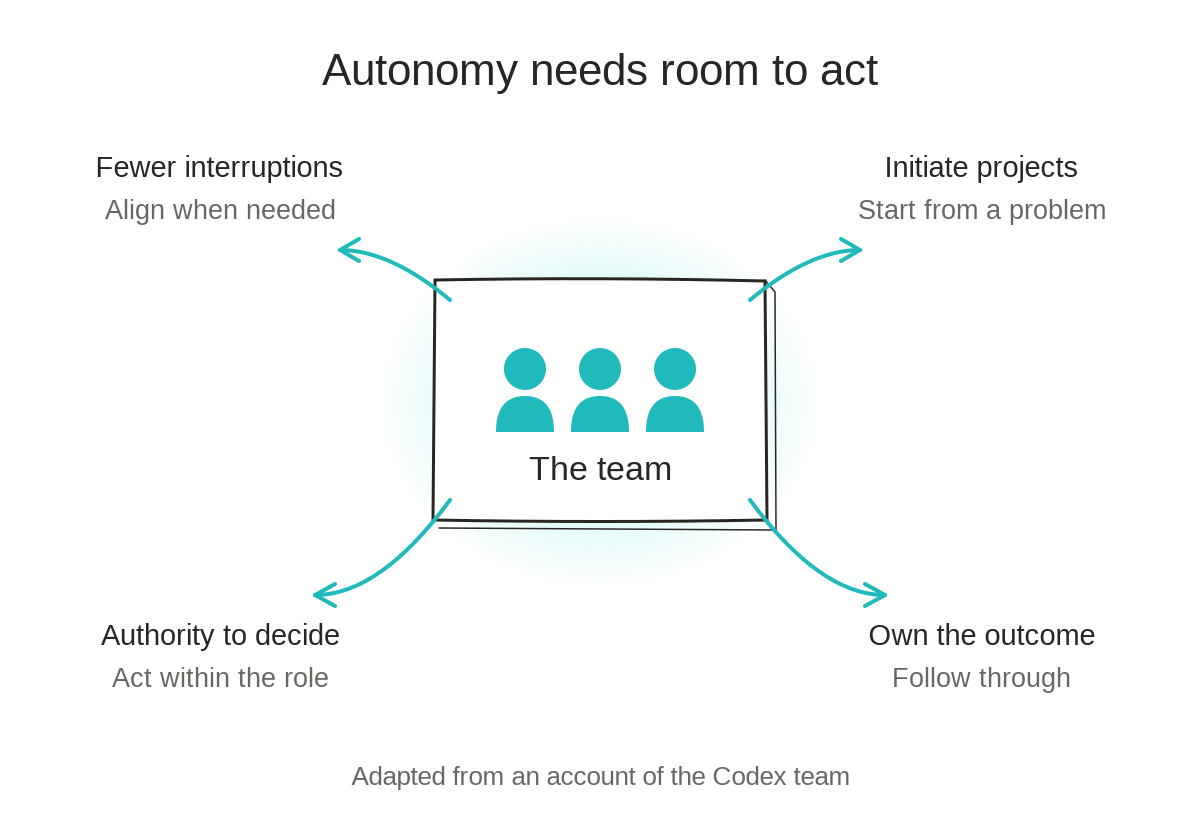
Redrawn and adapted from the team illustration in How OpenAI Builds AI-Native Engineering Teams, by Gregor Ojstersek.
That combination matters. If a person is accountable for the result but cannot make routine decisions within their remit, the role can turn into chasing approvals. If they can decide but never return to the results, the feedback needed for improvement is lost. The useful question for us is where the owner has enough authority, and where another person’s judgment needs to enter.
The Anthropic account offers another useful reference. In Ojstersek’s interview with its platform engineering lead, the team retains cross-functional roles while engineers take on more technical leadership; more parallel work also increases demand for product decisions. These are accounts of particular teams, and they leave room for different arrangements. They do not establish a single staffing model for an AI-native company.
Our own experience is too specific to justify a new universal organization chart. Within these cases, though, parts of the old workflow no longer fit.
In the product change, the owner could carry more of the investigation and preparation directly. More work could also collect around one person’s judgment during review. The unresolved user issue still required another specialist’s decision, however quickly the investigation had moved.
As we keep working this way, several questions remain open. Which waits have disappeared? Which checks still need another person’s expertise? Where have we simply moved the queue?
When I say, “I’ll own this,” I can now take more of the path myself. I still need the team at the points where our responsibilities meet. How well we handle those points will determine how much of the new execution capacity reaches the user.
Related reading: How Anthropic Builds AI-Native Engineering Teams, AI-Native Engineering Leadership, and How OpenAI Builds AI-Native Engineering Teams, by Gregor Ojstersek.